Polling shows British public places higher importance on new infrastructure to boost energy security and cut bills, rather than visual impact of new projects

New polling across England, Scotland and Wales shows strong public backing for the UK’s energy infrastructure programme, with clear priorities centred on jobs, climate change and economic strength, rather than visual appearance.

The results of the polling, undertaken by Early Studies and commissioned by a group of leading energy trade associations, challenge a long-standing assumption in planning debates. They find that visual impact, which is often cited as a leading objection, is in fact the lowest-ranked concern for the public, with just 11% of respondents selecting it as a main consideration for future energy needs.

This view is consistent across the political spectrum, from 12% of Labour and Conservative voters to 11% of Reform UK voters and 10% of both Liberal Democrat and Green Party voters, highlighting near unanimous national alignment.

Instead, the public is focused on the practical outcomes of energy infrastructure such as lower bills, secure livelihoods and a strong, growing economy.

Significantly larger portions of the public prioritise industrial competitiveness (39%), reducing air pollution (37%) and protecting existing jobs (25%).

Importantly, this does not mean people and developers are unconcerned about where and how infrastructure is built. Rather, it shows that visual impact is not as high a priority as is often presented in planning debates, and the public is prepared to support infrastructure that drives growth and job creation even when there is a visual impact.

It remains essential, however, for infrastructure developers to continue working with communities, particularly in areas where we are seeing cumulative impacts from development of multiple projects.

The findings underline strong support for delivering energy infrastructure at pace, helping the UK strengthen its resilience against global price shocks, volatile energy markets and supply disruptions, while accelerating the transition to clean power.

Although visual impact continues to feature prominently in planning debates, this new data shows it does not reflect the priorities of most people. Across communities and political divides, the focus is firmly on building a competitive, secure and future-ready energy system.

With energy projects being developed across the country, strong public support for investment, job protection and a stronger British industry is a welcome signal.

Charlotte Lee, HPA UK Chief Executive commented:

“The findings demonstrate clear public support for the energy transition and the infrastructure needed to deliver it. At a time when energy transition policies are under increasing scrutiny, the results show people increasingly view low-carbon technologies, including heat pumps, as an economic opportunity to support jobs, strengthen UK competitiveness and crucially enhance our energy security.”

Alfred Malmros, co-founder of Early Studies, said:

“We’re encouraged by the results, which show strong public support for energy infrastructure focused on energy security, climate change, jobs and a competitive UK industry. These priorities far outweigh concerns about visual impact, and reinforce the importance of delivering the infrastructure needed to ensure we have a secure supply of electricity. for clean, secure power. Renewable energy is an infinite source which can’t be controlled by other countries, and is already lowering wholesale electricity costs. With all its economic and security benefits, it’s clear clean power is the future our public wants.”

Aaron Gould, Interim CEO of ADE said:

“Voters care about cutting bills, protecting jobs and strengthening energy security. To deliver that, we need to start making best use of British renewable power and recover the heat from things like data centres. The best way to do this is by embracing a demand-led energy system, and building out modern networks for heat and power that befit a modern society – so we wring every ounce of value from the energy we generate.”

Olivia Powis, CEO of the CCSA, added:

“Carbon capture and storage infrastructure is essential to protecting and creating skilled jobs, delivering flexible low-carbon energy and the long-term competitiveness of British industry. This polling shows the public back the benefits that clean energy projects, such as carbon capture, can bring to communities across the UK.”

Dhara Vyas, Chief Executive Officer of Energy UK, said:

“Modernisation and expansion of our infrastructure is essential to meet the needs of the current and future energy system and to ensure we can maximise the potential of our clean energy resources. The impact of new developments can understandably be a concern for those nearby – so mitigating these and ensuring local communities benefit remains important – but it’s positive to see that the public appreciate the wider picture and understand that benefits like energy security, greater competitiveness, jobs and lower bills depend on building new infrastructure.”

Clare Jackson, CEO of Hydrogen UK, said:

“These findings show that clean energy infrastructure is not an abstract debate for the UK public. We have a responsibility to protect skilled jobs, strengthen British industry, cut exposure to volatile international energy markets and deliver a low carbon transition that supports UK energy security. The British public understands those priorities, and we know hydrogen will play a key role. Businesses have the tools to deliver – but we need a clear and consistent policy framework from government to embed resilience into our clean energy ecosystem.”

Tom Greatrex, Nuclear Industry Association Chief Executive, added:

“This polling shows that the public backs clean power investment when it means energy security, lower bills and good skilled jobs. Nuclear provides all three.

“As recent global crises have shown, Britain needs all the sovereign clean power it can get, which means backing new clean energy infrastructure and ensuring it is delivered at pace and at scale in a way that is proportionate and focused on outcomes. That means cutting unnecessary delays, giving investors confidence and getting projects built so families and businesses can benefit from reliable, homegrown clean power for decades to come.”

Trevor Hutchings, CEO of the REA, said:

“This survey reinforces what we already know: there is strong support for renewable energy and while we must not ignore concerns about energy infrastructure on communities, visual impact, which is often cited as reasons to reject a development, is in fact the lowest-ranked issue for the public. What the public does care about is greater security, growth and jobs, and to get a grip on their energy bills. This is what home-grown clean energy will do.

For the second time in four years, we have a fossil fuel energy crisis driving up bills and slowing the economy, and so the case for home grown clean energy has never been clearer.”

Tara Singh, CEO of RenewableUK, commented:

“Whilst we have a duty to ensure that only the most suitable projects get built in the right places, these results are a clear indication that the public understands how crucial homegrown clean energy is to our security and recognises the urgent need to bolster our ability to withstand price shocks by accelerating the rollout of energy infrastructure. The Government’s latest plans to limit the number of Judicial Reviews that can be logged against wind farms and grid expansion are a welcome first step, and we are calling on them to ensure billpayers across the country feel the benefits as soon as possible by further streamlining the planning system and minimising unnecessary delays.”

Claire Mack, Chief Executive of Scottish Renewables, said:

“Modernising and expanding Scotland’s clean energy infrastructure will be essential to delivering long-term energy security and economic resilience. Whilst meaningful engagement with local communities must remain central to new developments, it is encouraging to see broad public recognition of the vital role energy infrastructure will play in supporting our future prosperity. As we move forward, industry and government must continue working together to reduce delays and unlock the full value of clean energy projects for the country.”

Chris Hewett, Chief Executive of Solar Energy UK, added:

“We have long known that clean energy is highly popular, especially so for solar power. But the huge increase in the public’s appreciation for the sector’s role in bolstering energy security and its support for energy storage, as revealed by this study, are new and vital factors in the energy debate. It shows how voices opposed to the energy transition are fundamentally out of touch.”

Further information on the polling data cited is available here.

For media inquiries, please contact:

Olivia Smalley

Head of Policy and Communications

Olivia.smalley@staging.hpauk.org.uk

About the Heat Pump Association UK:

HPA UK is the UK’s dedicated voice for the Heat Pump Sector, driving widespread deployment of heat pump technology throughout the UK. Our membership includes the country’s leading manufacturers of heat pumps, components, and associated equipment as well as energy companies, certification bodies, installers, and training providers. We currently represent over 400 organisations working in the heat pump sector, with our members representing around 90% of the volume of heat pumps sold in the UK market.

HPA UK is the trading name of HPA Ltd.

National Heat Pump Week to launch in October 2026

The Heat Pump Association UK (HPA UK) and Nineteen Group, organiser of InstallerSHOW and elementalLONDON will launch National Heat Pump Week this October, a new national campaign designed to accelerate the UK’s transition to heat pumps.

Running from 12th October to 16th October 2026, National Heat Pump Week will provide a pivotal moment for all those in the heat pump sector to share knowledge, insights and expertise. With a combined reach of more than 1,000,000 built environment professionals, the campaign will deliver its impact through a series of webinars, articles, interviews, competitions and market insights from key industry figures.

National Heat Pump Week will aim to:

  • Increase understanding and confidence in heat pumps
  • Showcase real installations, innovation and consumer stories
  • Provide a platform for the sector
  • Create a coordinated week for media and political engagement
  • Provide learning and opportunities for installers and others across the supply chain

Themes for the week include:

  • Technology and performance – clearing up the basics and busting the common myths
  • Commercial and industrial heat – expanding the opportunity in commercial and industrial markets
  • Policy, markets and scale – connecting policy with progress and industry action
  • Demand and confidence – bridging knowledge to action and accelerating uptake
  • Installation and skills – practical, real-world insight from installers in the field

As the UK moves towards clean power by 2030 and net zero emissions by 2050, heat pumps are set to play a central role in decarbonising homes and buildings, evident in the Government’s Warm Homes Plan.

Commenting on the launch of National Heat Pump Week, Olivia Smalley, Head of Policy and Communications at the Heat Pump Association UK said:

“National Heat Pump Week is set to be a great opportunity for the sector to unite to celebrate how far it’s come to date and how much further we can go. The week will provide a dedicated moment to share technical insights, policy developments and key learnings as we transition to heat pumps.”

Also commenting on the launch of the week, Joe Sharpe, Head of Content for Installer at Nineteen Group, said:

“We’re thrilled to be supporting the UK’s first-ever National Heat Pump Week. The heat pump transition has already begun, and this week will provide plenty of opportunities for HPA UK members, manufacturers, suppliers and the wider industry to get involved to show their support and help drive adoption of this important technology as we move towards net zero.”

Interested in getting involved? National Heat Pump Wee sponsorship is now open to HPA UK members only until 7th June. To register your interest, visit: https://web.installeronline.co.uk/nhpw-register-interest

Not a HPA UK member and want to get your sponsorship locked in early? Visit here to find out more: https://staging.hpauk.org.uk/membership/

If you are a non-profit organisation and would like to find out more about supporting the week please contact: hello@staging.hpauk.org.uk with the Subject [National Heat Pump Week] to discuss opportunities.

For media inquiries, please contact:

Olivia Smalley

Head of Policy and Communications

Olivia.smalley@staging.hpauk.org.uk

About the Heat Pump Association UK:

HPA UK is the UK’s dedicated voice for the Heat Pump Sector, driving widespread deployment of heat pump technology throughout the UK. Our membership includes the country’s leading manufacturers of heat pumps, components, and associated equipment as well as energy companies, certification bodies, installers, and training providers. We currently represent over 400 organisations working in the heat pump sector, with our members representing around 90% of the volume of heat pumps sold in the UK market.

HPA UK is the trading name of HPA Ltd.

HPA UK Parliamentary Reception Spotlights Heat Pumps as Key to Energy Security 

HPA UK’s 2026 Parliamentary Reception brought together parliamentarians, industry leaders and policymakers at a pivotal moment, with energy security firmly back in the spotlight.

Under the theme ‘From Carbon to Competitiveness: The Economic and Societal Benefits of Heat Pumps in the UK’, the event built on HPA UK’s latest report, finding that heat pump manufacturing, installation and use contributed £1 billion to the UK economy in 2025, with the potential to grow to £15 billion by 2035.

Against the backdrop of renewed instability in global energy markets over the past month, conversations focused on the strategic importance of heat pumps in enabling the UK to make greater use of its homegrown electricity, reducing the reliance on volatile international fossil fuel markets while supporting skilled jobs and long‑term growth across the country.

It was an honour to have Martin McCluskey, Minister for Energy Consumers, join to deliver a keynote speech setting out the government’s priorities on energy affordability, consumer confidence and the role of electrification in strengthening UK energy security. Attendees also heard from Sponsoring MP Bill Esterson, Chair of the Energy Security and Net Zero Committee, as well as HPA UK Co-Chairs Mark Wilkins and Laura Bishop.

This reception was made possible by the generous support of our Main sponsors Vaillant and Grant UK and Supporting Sponsors PanasonicBaxi and Passiv.

Reflecting on the event, Charlotte Lee, Chief Executive of HPA UK said:

“Heat pumps are no longer just a clean energy solution; they play a pivotal role in the UK’s energy security and industrial strategy. By electrifying heat with technologies powered increasingly by UK generated renewable electricity, we can reduce exposure to unpredictable global fossil fuel markets, create skilled jobs, and deliver lasting economic benefits for households and communities. The discussions at HPA UK’s Parliamentary Reception highlighted the opportunity for the UK to turn clean heat into a competitive advantage.”

Representative from the events main sponsors also shared their reflections:

“Vaillant was pleased to sponsor and attend the Heat Pump Association UK’s first parliamentary reception, providing the sector with a valuable opportunity to engage with parliamentarians and stakeholders. Bringing together industry and policymakers, the reception highlighted how heat pumps can help the UK move from carbon reduction towards greater economic competitiveness.

As a manufacturer with a long-standing presence in the UK, Vaillant sees heat pumps as central to delivering clean heat while supporting productivity, skilled jobs and energy security. Accelerating the energy transition can strengthen the UK’s industrial base, reduce long term energy costs, and enhance competitiveness in the global clean technologies market while also delivering more affordable, efficient and comfortable heating for consumers.

Clear, long term policy frameworks are essential to unlocking investment across manufacturing, supply chains, skills, and innovation to enable deployment at scale across homes and businesses. It was encouraging to see strong parliamentary engagement and growing momentum behind the sector. We look forward to continued collaboration with HPA UK and the government to realise these economic and consumer benefits.”

Henrik Juhl Hansen, Managing Director, Vaillant

“The HPA UK continues to play a vital role in supporting and shaping the future of the UK heat pump sector, and its Parliamentary Reception at the House of Commons provided a great opportunity for meaningful discussion” comments Neil Sawers, Commercial Technical Manager at Grant UK. “The event brought together representatives from all corners of the sector, from manufacturers and installers through to Industry bodies and Government policymakers. Grant UK was very pleased to attend and support as a main sponsor for the afternoon.

With heat pumps central to current and future policy, collaboration between Government and industry has never been more important. The HPA UK Parliamentary Reception was an opportunity for all parties to impart insight and listen. While the commitments outlined in both the Warm Homes Plan and Future Homes Standard place heat pumps at the forefront of funding and future legislation, the pillars of delivery – training, installation standards, supply and electricity costs – remain areas where more action is needed.

Thank you to the HPA UK team for organising this successful event.”

Neil Sawers, Commercial Technical Manager, Grant UK

Interested in attending events like this one? Find out more about HPA UK membership here: https://staging.hpauk.org.uk/membership/

For media inquiries, please contact:

Olivia Smalley

Head of Policy and Communications

Olivia.smalley@staging.hpauk.org.uk


About the Heat Pump Association:

HPA UK is the UK’s dedicated voice for the Heat Pump Sector, driving widespread deployment of heat pump technology throughout the UK. Our membership includes the country’s leading manufacturers of heat pumps, components, and associated equipment as well as energy companies, certification bodies, installers, and training providers. We currently represent over 400 organisations working in the heat pump sector, with our members representing around 90% of the volume of heat pumps sold in the UK market.

HPA UK is the trading name of HPA Ltd.
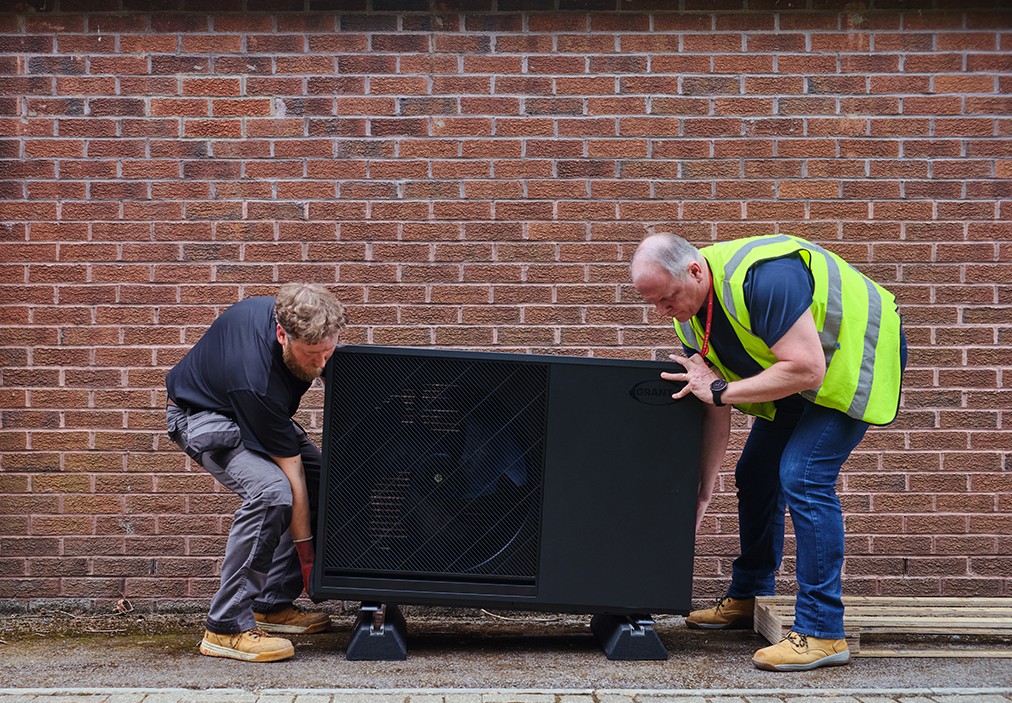
Heat pump sector calls for policy certainty to accelerate adoption in non-domestic buildings 

The Heat Pump Association UK has today set out key policy recommendations to accelerate the deployment of heat pumps in Commercial, Public Sector and Industrial settings in the UK. The latest publication from the newly merged trade body outlines a series of actions that the heat pump sector and wider stakeholders involved in the supply chain, can take, together with key asks for the Government.

Whilst heat pump sales continue to grow in the UK, with more than 125,000 heat pumps sold in 2025, the vast majority of these are installed in domestic properties. Heat pumps in non-domestic settings remain a small fraction of the market, despite it representing a significant share of the UK’s heat demand. The Climate Change Committee expects 88% of non-residential heating to come from low carbon sources by 2040, with rapid electrification required to meet the UK’s 2050 targets.

HPA UK key policy recommendations for Government include calls to:

  • Publish a national “Plan for the Electrification of Non-Domestic Heat”, supported by a dedicated taskforce to deliver this
  • Work to reduce the high cost of electricity relative to fossil fuels for all non-domestic energy users to improve UK competitiveness
  • Provide clarity on future funding mechanisms for public sector decarbonisation, following the announced closure of Public Sector Decarbonisation Scheme in June 2025
  • Identify fast‑track grid connection zones for industrial electrification
  • Develop business models to unlock private investment in heat pump technologies

Commenting on the publication, HPA UK Commercial and Industrial Consultant, Bean Beanland, said: “The confirmation that the Future Homes and Buildings Standard will mandate low carbon heating in non-domestic buildings from 2028 is welcome. But a new build mandate alone is not enough to sustain the supply chains that developed under PSDS, and which are critical to future decarbonisation. Without a clear strategy and stable policy framework, the retrofit market risks underperforming, putting these vital supply chains, including UK companies and employment, at risk. What is needed now is clear direction, aligned incentives, and sustained practical support that gives businesses the confidence to invest, innovate, and scale.”

Laura Bishop, Co-Chair of HPA UK, also commented: “Our members are already collaborating on effective solutions to scale heat pump adoption in non-domestic buildings. We look forward to continuing our work with Government, building on the strong progress already made, and putting in place the frameworks needed to accelerate delivery and support the UK’s transition to electrified heating.”

HPA UK acknowledges that the Government alone cannot drive the market. The association stands ready to support the sector by collating and amplifying information, showcasing best practice, developing guidance, strengthening data collection and market insight, and exploring how to further develop the workforce.

To view the HPA UK’s paper in full, click here.


For media inquiries, please contact:

Olivia Smalley

Head of Policy and Communications

Olivia.smalley@staging.hpauk.org.uk


About the Heat Pump Association:

HPA UK is the UK’s dedicated voice for the Heat Pump Sector, driving widespread deployment of heat pump technology throughout the UK. Our membership includes the country’s leading manufacturers of heat pumps, components, and associated equipment as well as energy companies, certification bodies, installers, and training providers. We currently represent over 400 organisations working in the heat pump sector, with our members representing around 90% of the volume of heat pumps sold in the UK market.

HPA UK is the trading name of HPA Ltd.

UK Heat Pump sales reach record high in 2025, but more must be done to meet Government targets 

New data published by the Heat Pump Association UK shows that heat pump sales reached another record high in 2025, with over 125,000 units sold in the UK, a 27% increase on the previous year. This marks another year of sustained growth for the sector, with 36% of heat pump sales being manufactured in the UK.  

Breaking down the HPA UK factory gate sales data further, key highlights include: 

  • 125,037 total heat pump sales, including 110,353 hydronic heat pump sales in 2025 
  • A 27% increase compared to 2024 sales 
  • All types of heat pumps saw a steady increase in sales when comparing 2025 to 2024, with a 26% rise in Air to Water Monobloc heat pumps, a 32% increase in Ground and Water source heat pumps and 36% increase in Domestic Hot Water heat pump sales 
  • The number of heat pumps sold in the UK that were manufactured in the UK increased by 38% in 2025 relative to 2024 

Whilst this growth is very positive, the rate of growth has slowed compared to the 56% surge recorded in 2024. To achieve 450,000 heat pumps installed per year by 2030, in line with the target set out in the Warm Homes Plan, the market would need to see 33% compound growth in heat pump sales year on year. 

Our latest analysis shows that the economic opportunity associated with accelerating the deployment of hydronic heat pumps in line with the Carbon Budget Growth and Delivery Plan could increase UK gross value added by £14 billion over the course of the decade and contribute to a potential 62% reduction in the reliance on imported gas by 2035.  

Commenting on the data, Charlotte Lee, HPA UK, Chief Executive, said:  

Following the publication of the Warm Homes Plan, it’s evident that heat pumps remain a pivotal technology to decarbonise heat in the UK. The continued growth of the UK heat pump market is extremely positive, but to meet the Government’s target of 450,000 heat pump installations annually by 2030, momentum must be maintained.  

The sector eagerly awaits the publication of the Future Homes and Building Standard Regulations and calls on the Government to urgently publish a consultation which sets out options to reduce the price of electricity relative to gas. Both are needed to provide the sector with confidence that the main barriers to accelerate heat pump deployment are being unlocked. 

Paul Kenny, Director General of the European Heat Pump Association, commented:  

The growth in UK heat pump sales is testament to the steady policy support from the government in recent years, a link that also clearly plays out across EU markets. 

This positive trend will be consolidated by the UK’s new Warm Homes Plan. Its comprehensive mixed package of regulatory actions and long term funding of subsidies can serve as inspiration to EU markets looking to grow their heat pump sectors and reap the benefits in terms of competitiveness and domestic production. 

However, as in much of Europe, the ratio of tax on electricity to gas remains an issue in the UK and must be addressed to ensure heat pumps large and small are the most cost efficient choice for end users. 

With the Warm Homes Plan reaffirming the Government’s commitment to heat pumps, HPA UK are calling for urgent action to unlock further growth.  

See HPA UK’s full statistics here: https://staging.hpauk.org.uk/resources/statistics/

Notes to Editors:

  1. HPA UK data includes factory gate sales of Air-to-Water (A2W) monobloc heat pump units, Air-to-Water (A2W) split heat pump units, Ground and Water Source heat pump units, domestic hot water heat pumps (DHWHP) and “other”- which includes Exhaust Air Heat Pumps and Integrated Hybrid Heat Pumps. 
  2. It does not include air to air heat pumps and therefore makes it incomparable to many European Country data sources. 

For media inquiries, please contact:

Olivia Smalley

Head of Policy and Communications

Email: Olivia.smalley@thehpa.org.uk

About the Heat Pump Association:

The HPA is the UK’s dedicated voice for the Heat Pump Sector, driving widespread deployment of heat pump technology throughout the UK. Our membership includes the country’s leading manufacturers of heat pumps, components, and associated equipment as well as energy companies, certification bodies, installers and training providers.  We currently represent over 350 member organisations working in the heat pump sector, with our members representing around 90% of the volume of heat pumps sold in the UK market.

New Analysis Reveals £22.5bn Economic Opportunity if UK Accelerates Heat Decarbonisation

The Heat Pump Association UK (HPA UK) has today published new analysis showing that the transition to low carbon residential heating represents a significant economic, employment and energy security opportunity. The findings come as the UK Government urgently seeks opportunities to boost economic growth, with the UK economy only growing by around 1.5% in 2025.

The report, From Carbon to Competitiveness: The UK Opportunity Associated with Decarbonising Residential Heating, models the impact of accelerating the deployment of decarbonised heating in line with the ambition set out in the Government’s Carbon Budget and Growth Delivery Plan for 2025-2035. It finds that electrifying home heating, primarily through hydronic heat pumps, could increase total Gross Value Added (GVA) from residential heating from £12.2 billion today to £22.5 billion by 2035, an 85% rise from 2025.

Key findings include:

  • Heat pump manufacturing, installation and use was already worth £1.0 billion to the UK economy in 2025, with the opportunity to rise to £15.0 billion by 2035.
  • Heat pump related employment could grow by over 110,000 full-time equivalent jobs by 2035, accounting for 82% of jobs in the residential heating sector.
  • UK manufacturing could expand by between 15-fold and 27-fold by 2035, with further potential through exports.
  • Gas demand could fall by 63 TWh between 2025 and 2035, saving enough energy to run the London Underground for 75 years.
  • Public health benefits are evident, including a projected 6% reduction in overall UK air pollution by 2035 as fossil fuel boiler numbers decline.
  • Carbon abatement from the rollout of heat pumps could reach 17 MtCO₂e annually by 2035, equivalent to 20 million passenger flights from London to New York.

Commenting on the release, Charlotte Lee, HPA UK’s Chief Executive, said: “Today’s findings show that decarbonising residential heating should not be viewed as a cost burden, but a major economic opportunity. Heat pumps can drive billions of pounds in growth, support tens of thousands of skilled jobs across the country and strengthen the UK’s energy security by reducing reliance on imported gas. With the right long term policy clarity, the UK can build a world-leading heat pump industry, grow our domestic manufacturing, and deliver cleaner, healthier homes for millions of residents.”

Chris Galpin, an energy advisor at climate think tank E3G, said: “Modernising Britain’s homes will make them warmer, more comfortable, and cheaper to heat. But it also has the potential to add billions to the UK economy. The UK should stop overtaxing electricity to unlock billions more in additional investment towards these bill-saving home upgrades.”

Garry Felgate, Chief Executive of The MCS Foundation, said, “MCS data shows that a record number of certified heat pumps are being installed across the UK. The analysis released today adds an additional layer to an already positive story – the boom in renewables is boosting well-paid jobs, driving the green economy, and providing efficient, affordable, fossil-free heating for households. To further enhance this trend, it is critical the Government reduce disproportionately high electricity prices. Doing so would maximise the economic opportunities and ensure households see the full benefits of savings on their energy bills.”

The publication of this report follows the organisation’s transition to HPA UK, following the successful merger of the Heat Pump Association, Ground Source Heat Pump Association and Heat Pump Federation, reflecting its expanded role in unifying the sector and its support for the UK’s accelerated deployment of heat pumps.

From Carbon to Competitiveness: The UK Opportunity Associated with Decarbonising Residential Heating is available to download today. Read the full report here and the executive summary here.

Interested in learning more about the analysis? Register for our free webinar here.

Notes to Editors:

  1. The analysis is based on Government assumptions published in the 2025 Carbon Budget and Growth Delivery plan, and modelling generated from data in the Climate Change Committee’s Seventh Carbon Budget.
  2. The evaluation focuses on residential space heating appliances: hydronic heat pumps, fossil fuel boilers, and direct electric heating.
  3. The assumptions in the Warm Homes Plan are presented on a different basis from the Carbon Budget and Growth Delivery Plan. They would, in comparison, represent slower growth up to 2030, followed by a 9% increase in the heat pumps to be installed from 2031 to 2035 to realise the opportunities included in the report.

For media inquiries, please contact:

Olivia Smalley

Head of Policy and Communications

Email: Olivia.smalley@thehpa.org.uk

About the Heat Pump Association:

The HPA is the UK’s dedicated voice for the Heat Pump Sector, driving widespread deployment of heat pump technology throughout the UK. Our membership includes the country’s leading manufacturers of heat pumps, components, and associated equipment as well as energy companies, certification bodies, installers and training providers.  We currently represent over 350 member organisations working in the heat pump sector, with our members representing around 90% of the volume of heat pumps sold in the UK market.

Heat Pump Association Celebrates 30 Years with Inaugural Conference

Heat Pump Association Celebrates 30 Years with Inaugural Conference

On the 26th of November, the Heat Pump Association (HPA) celebrated its 30th anniversary with its first-ever Conference, bringing together members, policy makers and industry leaders to reflect on three decades of progress and discuss how the sector can continue to move forward at pace.

Held at the British Library in London, the event followed on from the HPA’s Annual General Meeting, at which the Association presented its AGM report, providing an overview of progress over the past year and key priorities for the year ahead. The full report is available here.

Gathering professionals from across the heating and energy sector under the theme ‘Heat Pumps: How to go further, faster…’, conference discussions focused on practical steps to accelerate deployment, build skills, and strengthen consumer confidence as part of the UK’s wider journey to electrify heat.

The conference opened with a video address from Minister for Energy Consumers Martin McCluskey MP, who reaffirmed the Government’s support for cleaner, low-carbon heating technologies and highlighted the role of industry collaboration in making the transition work for . With the Autumn Budget released the same day, the Minister’s remarks set the scene for timely discussions on the impact on the sector and consumer energy costs.

Delegates heard from an impressive range of speakers, including Paul Kenny, Director General at the European Heat Pump Association, and Nick Winser, Commissioner at the Clean Power Advisory Commission. Sessions covered topics from heat networks to the new MCS installer scheme, with conversations on policy, innovation, and delivery.

An engaging panel discussion rounded off the afternoon, with panellists Dr Emily Nurse (CCC), Madeleine Gabriel (Nesta), Damon Blakemore (HPA Installer Representative), Dr Richard Lowes (Regulatory Assistance Project) and Samantha Hewson (DESNZ) discussing how we can build momentum across the supply chain and find solutions to accelerate heat pump deployment.

Finally, the day concluded with a networking drinks reception with closing remarks from HPA Chair Mark Wilkins, where Craig Dolan, past HPA Chair, was awarded an Exceptional Member Contribution for his dedication to the Association.

Reflecting on the event’s success, Charlotte Lee, Chief Executive of the HPA said:

“It was fantastic to see so many members, stakeholders, and policymakers come together to celebrate the Association’s 30th anniversary and look ahead to what’s next. The discussions throughout the day showed the strength and diversity of our sector, and the shared ambition to make low-carbon heating a reality for homes, businesses and industry across the UK. The conference highlighted just how far the industry has come, and the determination across the sector to keep collaborating and learning to ensure heat pumps play their part in building a more resilient, affordable, and sustainable energy future.”

This year’s conference was made possible by the generous support of our members and our sponsors:  Gold Sponsors – Grant UK and NIBE; Silver Sponsors – Dimplex, E.ON, and Vaillant; Bronze Sponsors – City Plumbing, Bosch, and Rothwell Plumbing Services; Lunch Sponsor – MCS; and Drinks Reception Sponsors – GTEC / Heatly.

Representatives from key sponsors shared their reflections on the HPA’s first Annual Reception.

Paul Smith, Managing Director at NIBE, commented, “Last week’s HPA AGM and Conference was a standout moment for our sector. The format, speakers and discussions offered real clarity on the opportunities and challenges ahead, and it was refreshing to see topics explored from new perspectives. Congratulations to the HPA team for delivering such a well-organised and impactful event. We were proud to support it as Gold sponsors and look forward to supporting again next year as we continue working together to accelerate the UK’s transition to reliable, low-carbon heating.”

Anna Wakefield, Head of Internal Sales and Marketing at Grant UK, said, “The HPA’s first annual conference held in London was an excellent event, one which Grant UK was pleased to support as a Gold Sponsor. What was clear throughout the conference was an unwavering focus on how everyone in our industry can work together to support uptake, encourage growth and develop a secure future for this low-carbon heating technology. Grant UK is proud to be a member of the HPA who are serving as an incredibly proactive industry body during a pivotal time for renewable heating. The HPA brings together the voices of those that need to be heard from the heat pump sector and represents them where needed, and their inaugural annual conference embodied this work and so much more. Congratulations to the HPA Team for organising such an impactful event.”

Mark Wilkins, Technology and Solutions Portfolio Director at Vaillant, added “Vaillant was proud to support the Heat Pump Association’s first Annual Conference as silver sponsor, marking its 30th anniversary and driving the conversation on how to go further and faster in heat pump deployment. As a leading manufacturer of heat pumps, which is committed to accelerating the UK’s transition to low-carbon heating, we welcomed the opportunity to collaborate with industry experts, policymakers, and installers at this conference. With ambitious targets ahead, building installer capacity and ensuring consumer confidence are critical. Together, we can deliver the UK’s clean heating ambition but achieving this requires a strong partnership between Government and industry.”

Craig Dolan, Senior Product Manager at Dimplex, said “Dimplex are proud to have sponsored the recent HPA conference. This is a continuation of the close working relationship we’ve had with the HPA in recent years, helping them to push the heat pump agenda. The work that the HPA do is vital, giving a consistent voice for the whole heat pump sector as we look to engage policymakers and other stakeholders in accelerating the rollout of low-carbon heat pump technology. The conference at the British Library was a great success. The high turnout and level of engagement clearly demonstrate the importance of the challenges and opportunities surrounding heat pump deployment.”

Jon Rand, Industry Expert and Growth Enablement Manager at E.ON Next, commented, “At E.ON Next, we were proud to sponsor the Heat Pump Association Annual Conference, a cornerstone event driving innovation and collaboration across the low-carbon heating industry. This partnership reflects our commitment to accelerating the transition to sustainable energy solutions and supporting organisations that share our vision for a cleaner future. Heat pumps play a vital role in decarbonising homes and businesses, and the insights generated at this conference help move the sector forward. By investing in industry leadership and knowledge exchange, E.ON Next continues to champion technologies and partnerships that empower communities to achieve long-term energy resilience and net-zero goals.”

Notes to Editors:

For media inquiries, please contact:

Olivia Smalley

Head of Policy and Communications

Email: Olivia.smalley@thehpa.org.uk

About the Heat Pump Association:

The HPA is the UK’s dedicated voice for the Heat Pump Sector, driving widespread deployment of heat pump technology throughout the UK. Our membership includes the country’s leading manufacturers of heat pumps, components, and associated equipment as well as energy companies, certification bodies, installers and training providers.  We currently represent over 350 member organisations working in the heat pump sector, with our members representing around 90% of the volume of heat pumps sold in the UK market.

HPA releases Flammable Refrigerant Training Policy Statement

HPA releases Flammable Refrigerant Training Policy Statement

The Heat Pump Association (HPA) has published a new Flammable Refrigerant Training Policy statement, recommending that awareness of both F-Gas and non-F-Gas flammable refrigerants should be held by all those installing heat pumps.

In light of the ongoing review of GB F-Gas regulations and the anticipated consultation, along with recent action in the EU to introduce mandatory certification for flammables, the statement comes at a welcome time for the sector.

The policy statement is further supported by findings from a recent ACRIB survey of sector companies, including HPA members, focused on refrigerant handling training, qualifications and skills. The survey revealed strong employer support for mandatory certified training for those handling flammable refrigerants in the UK, reinforcing the need for the sector to support developments in this area.

Positively, the survey results show high levels of awareness of available qualifications for handling flammable refrigerants, with many employers already implementing training programmes.

Additionally, the survey highlights the sector’s commitment to avoiding gaps in refrigerant handling, when policies are encouraging the use of lower GWP refrigerants, some of which are not fluorinated gasses, and therefore are not covered by the current regulations, which require operatives to be certified.

Commenting on today’s releases, Charlotte Lee, HPA Chief Executive, said: “Today’s publication demonstrates the strong support from the sector for levelling the playing field in terms of installer training and certification requirements for both F-Gas and non F-Gas flammable refrigerants. The HPA will continue to work with its members, stakeholders and policy officials to call for this alongside the expected review of GB F-Gas regulations.”

To view the HPA’s Flammable Refrigerant Training Policy, click here.

Notes to Editors:

For media inquiries, please contact:

Olivia Smalley

Head of Policy and Communications

Email: Olivia.smalley@thehpa.org.uk

About the Heat Pump Association:

The HPA is the UK’s dedicated voice for the Heat Pump Sector, driving widespread deployment of heat pump technology throughout the UK. Our membership includes the country’s leading manufacturers of heat pumps, components, and associated equipment as well as energy companies, certification bodies, installers and training providers.  We currently represent over 350 member organisations working in the heat pump sector, with our members representing around 90% of the volume of heat pumps sold in the UK market.

Domestically manufactured heat pumps account for a third of UK heat pump sales in 2024

Domestically manufactured heat pumps account for a third of UK heat pump sales in 2024

New figures from the Heat Pump Association (HPA) show that 32,920 of the 98,345 heat pumps sold in the UK in 2024 were manufactured domestically, accounting for a third of the total factory gate sales. This represents a 40% increase from 2023.

This growth highlights the increasing role of UK manufacturing in the clean heating transition. The Government’s Clean Energy Industries Sector Plan, published in June this year, identifies heat pumps as a frontier industry and estimates that the heating and cooling sector could generate £4.8 billion annually by 2050, including £900 million from exports.

The Institute for Public Policy Research highlights that the UK’s existing strengths in boiler and HVAC manufacturing provide a strong foundation for expanding heat pump production further. Many of the same engineering skills, components and supply chains are shared, offering significant potential to scale domestic manufacturing and secure high-value jobs.

The HPA welcomed measures such as the Heat Pump Investment Accelerator, a £30 million programme supporting major investments in UK heat pump and component manufacturing. Two projects have so far received a combined total of nearly £10 million, and the HPA awaits the detail of the expected phase 2 of the competition as promised in the Industrial Strategy. However, growth in the UK heat pump manufacturing industry depends on market confidence, which could be heightened by the timely implementation of the Future Homes and Buildings Standard, and addressing the high price of electricity relative to gas.

This data is published to mark Heat Pump Day, which highlights the role of heat pumps in Europe’s energy transition. The European Heat Pump Association (EHPA) continues to call for clearer, longer term and structural policy changes that drive the demand for heat pumps. 

Charlotte Lee, Chief Executive of the HPA, said:As the heat pump market in the UK matures, it’s great to see the sector investing in on-shoring supply chains to increase resilience and responsiveness. Confidence in the market is crucial to secure further investment, and we call on the Government to publish the Future Homes and Building Standard without delay. This no-regrets step clearly sets the direction for the heating transition, and shouldn’t be underestimated in its importance to strengthen the supply chain.

Minister for Energy Consumers Martin McCluskey said:These figures show the clean power mission in action, with skilled, homegrown jobs in the clean technologies of the future. The British public have shown record demand for heat pumps as more and more families take up our offer of a £7,500 grant. Which is why, to help meet the growing demand, we have already committed almost £10 million to boost homegrown heat pump production in the UK.”

Paul Kenny, Director General of EHPA said: “This new UK data is yet more proof that confidence and a stable market are crucial to ensure the local demand that drives local production. Europe has 300 heat pump manufacturing sites and 433,000 jobs in the sector, and this great base can be strengthened further with steady subsidy schemes and energy taxation that reassure consumers”

To view the HPA’s UK Factory Gate Sales Data visit: http://hpa-bye-bye-divi.local/resources/statistics/

Notes to Editors:

In relation to the data collated by the HPA, the scope of UK manufacturing is agreed as to be “wholly produced, manufactured, or assembled within the UK, or have been significantly changed through a treatment or process within the UK”.

For media inquiries, please contact:

Olivia Smalley

Head of Policy and Communications

Email: Olivia.smalley@thehpa.org.uk

About the Heat Pump Association:

The HPA is the UK’s dedicated voice for the Heat Pump Sector, driving widespread deployment of heat pump technology throughout the UK. Our membership includes the country’s leading manufacturers of heat pumps, components, and associated equipment as well as energy companies, certification bodies, installers and training providers.  We currently represent over 350 member organisations working in the heat pump sector, with our members representing around 90% of the volume of heat pumps sold in the UK market.

HPA reacts to the Clean Energy Jobs Plan

HPA reacts to Clean Energy Jobs Plan

Commenting on the publication of the Clean Energy Jobs Plan, Olivia Smalley, Head of Policy and Communication at the Heat Pump Association, said:

“We warmly welcome the ambition and commitment set out in the Government’s Clean Energy Jobs Plan, which marks an important step toward building the skilled workforce needed to accelerate heat pump deployment. With training uptake and heat pump sales continuing to rise, this plan provides much-needed clarity and long-term direction for those working across the sector.

To fully unlock the sector’s potential, we now look to the highly anticipated Warm Homes Plan and the Future Homes Standard to provide the detailed policy framework and certainty our industry needs to invest and deliver at scale. We look forward to working with Government and industry to ensure the sector continues to grow.”

Read the publication in full here.

Notes to Editors:

For media inquiries, please contact:

Olivia Smalley

Head of Policy and Communications

Email: Olivia.smalley@thehpa.org.uk

About the Heat Pump Association:

The HPA is the UK’s dedicated voice for the Heat Pump Sector, driving widespread deployment of heat pump technology throughout the UK. Our membership includes the country’s leading manufacturers of heat pumps, components, and associated equipment as well as energy companies, certification bodies, installers and training providers.  We currently represent over 300 member organisations working in the heat pump sector, with our members representing around 90% of the volume of heat pumps sold in the UK market.