
Q&A with Craig Dolan – Reflecting on his time as HPA Chair

Q&A with Craig Dolan – Reflecting on his time as HPA Chair

23rd September, 2025

Craig Dolan has been an active participant of the Heat Pump Association (HPA) for nearly a decade, having worked in the sector for over 18 years. He was elected as Chair in September 2023, having served as Vice Chair from 2021. His tenure has seen the HPA develop from an Association with 40 members to one representing the complete heat pump supply chain with over 350 members. We caught up with him to reflect on his time in the role, progress made across the sector, and what lies ahead.

1. Since you  stepped into the role of Chair in 2023, what has been the biggest change you’ve seen in the heat pump industry?

The most significant change I’ve seen whilst I’ve been in the role is the proactive engagement from Government. Before, there seemed to be some underlying mistrust of heat pumps, even though they are in no way a new technology. Now, there seems to be a lot more positivity and pragmatism. We’ve seen this in the HPA with our sales figures, which saw just under 100,000 heat pumps sold to the UK market in 2024 and which we update DESNZ on  monthly. There’s been a definite change in tone and cadence to the meetings we have with officials now, and it feels like the tide has turned from how can we avoid making this change to how can we make this happen. 

2. What is your proudest achievement during your time as Chair of the HPA?

I’ve been reflecting on this over the last few months, but ultimately, I’m incredibly proud of the way the association has grown over the past 4 years. It started with hiring Charlotte as Chief Executive and then expanding the team, which has been essential to supporting our growing membership. Our members now reflect the entire heat pump supply chain and are so keen to be involved in the HPA’s work and support collaboration. I wanted to build on the progress that Graham Wright and Phil Hurley made in their time as Chairs, and it has definitely exceeded my expectations of what I thought would be possible in two years. The fact that we have created an established and trusted voice for the industry and have really levelled up at every challenge is a testament to our work and our members’ commitment to progress.

3. Is there a particular moment or experience that has stayed with you?

One moment that stands out to me is representing the HPA at a Government Select Committee regarding Grid Connections. It was a real ‘How did I get here?’ moment! It felt great to be able to provide a voice for the sector on a really important topic. It can be difficult to go through the process of connecting heat pumps to the energy system, but it’s people’s heating – you can’t mess about with it. We need to make sure the process is as smooth for households and businesses as possible. Getting the feedback from the committee that they felt I was ‘thoughtful, thorough, and trustworthy’ was a career highlight, and this is the approach I have aimed to maintain throughout my tenure as Chair.

Another memorable moment is being invited to speak with Miatta Fahnbulleh MP, Minister for Energy Consumers, when she was first appointed to office. We were also honoured to have her attend our Member Networking Reception last year and I’m looking forward to her Ministerial Address at the HPA Conference in November. But really, it’s hard to pick just one thing! You rattle through and you think ‘Blimey, we’ve done a lot!’.

4. Looking ahead, what excites you most about the future of the HPA and the wider heat pump sector?

We’ve definitely got positive momentum going with the heat pump sector now. The anti net-zero sentiment is something we need to be very aware of, but heat pumps have so many other benefits for energy security, healthy homes and people. Net zero is really just another positive outcome of progressing with the rollout.

I’m also really looking forward to our first Conference in November, which was something I wanted to achieve so that we could bring together all our members and stakeholders.

Really, there is quite a lot to be positive about. There’s a lot to do, but we’re making progress and it’s important to remember that there’s no one way of doing things. It’s great to know now that the ball is rolling, and we can see this in our UK heat pump sales figures.  Mass adoption of heat pumps has always been on the horizon, and now it feels like it’s getting a bit more into focus.

5. What advice would you offer to the next Chair as they step into the role?

Enjoy it! It can take up a lot of bandwidth in your head, but you just have to keep an eye on the horizon and keep things on course. There might be bumps in the road, but they’re just bumps, not impermeable medieval walls! Just roll with it and enjoy working with the members and listening to different points of view. Diplomacy is key.

It’s also just about making sure the HPA team are happy and has the direction and headspace to keep making progress and moving forward with the association’s work.

6. Now that you’re no longer fielding emails from the HPA team, how are you planning on enjoying the extra headspace?

I will probably fill that extra headspace with more work from my day job!

One thing I’m really looking forward to is not reading out the whole Competition Law Statement at the start of every meeting! I’ve insisted that it’s just as difficult to read for the next chair.

But I still want to be involved and proactive within the association. I’d like to get stuck into some of the working group activities a bit more, especially the technical and commercial ones.  

I’m excited to see what’s next, as we’ve done so much work behind the scenes over the past two years, it will be great to see more of it come into action!


Craig’s leadership has helped steer the HPA through a period of significant growth  and his contributions have left a lasting impact. As the association looks to the future, we thank him for his dedication and immense support.
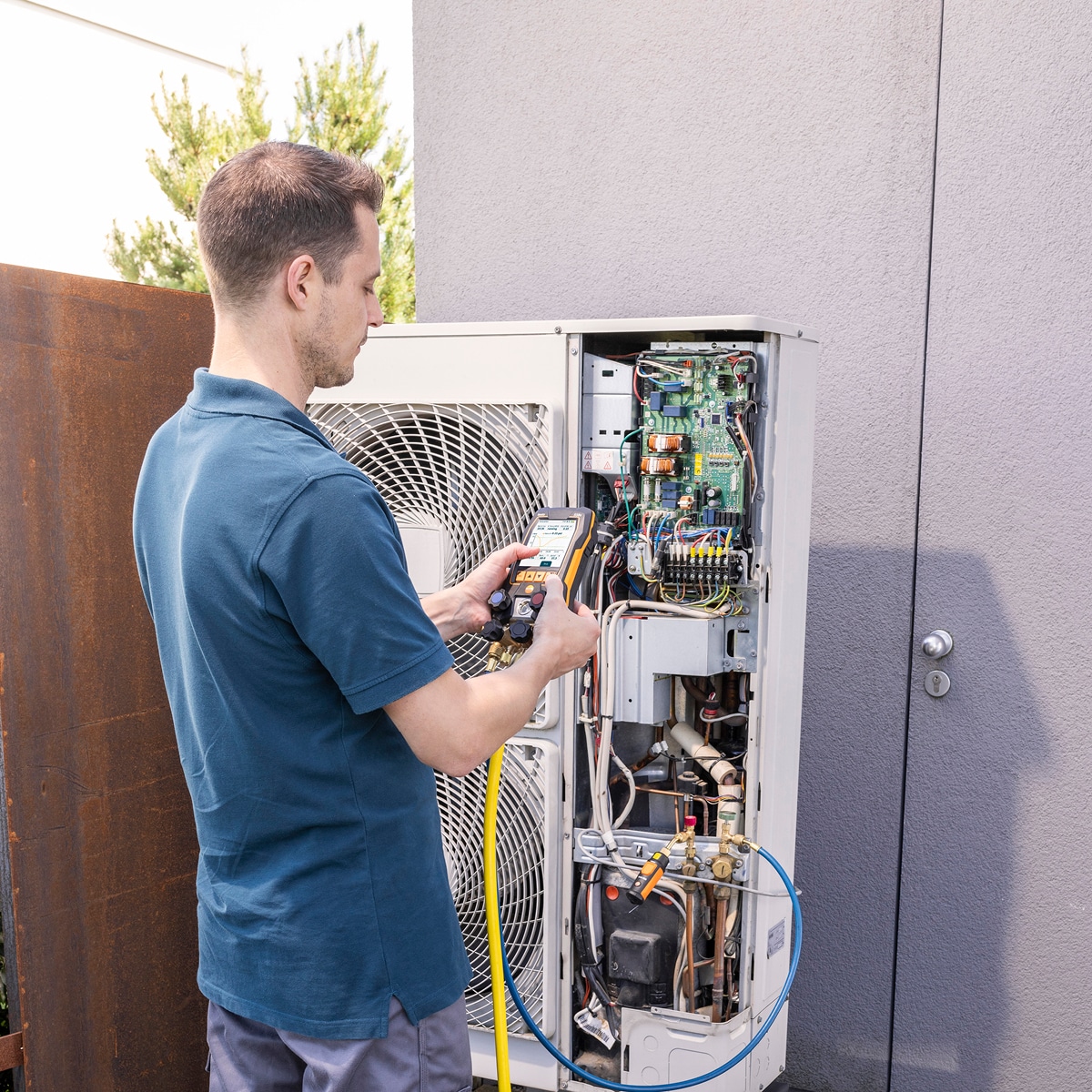
 

Building a skilled and active heat pump workforce

Building a skilled and active heat pump workforce

Feb 17, 2025

HPA’s Head of Policy and Communications Olivia Smalley writes for Energy Systems Catapult, in collaboration with Rebecca Sweeney, Business Leader – Homes, at Energy Systems Catapult.

Read the full piece on the Energy Systems Catapult website here, or below.

Meeting the UK’s legally binding Net Zero carbon emission reduction targets hinges on decarbonising heat in buildings. Accounting for 18% of all of the UK’s greenhouse gas emissions, fossil fuel heating must be replaced by electrified heating solutions like heat pumps – a proven, efficient, scalable low-carbon technology.

In 2020, the previous government set a target to install 600,000 heat pumps per year by 2028, increasing to 1.6 million per year by 2035. Encouragingly, consumer interest is growing, with nearly 100,000 heat pumps sold in the UK in 2024, representing a 63% increase from 2023. Government schemes, such as the Boiler Upgrade Scheme and Energy Company Obligation, are playing a key role in accelerating adoption. To sustain this momentum and meet future targets, the UK will need to continue expanding heat pump deployment, with a crucial focus on significantly growing a qualified, competent workforce.

The role of installers in accelerating heat pump deployment

Heat pump installers are responsible for the safe and efficient installation of heat pumps, ensuring they operate effectively and meet both performance and safety standards. High-quality installations are key to building consumer trust and accelerating demand through word-of-mouth recommendations. Installers are much more than technical operatives – they also serve as ambassadors for heat pumps, who will no doubt play a key role in communicating the benefits of the technology to consumers who are considering the switch from fossil fuel heating.

The heat pump workforce demand

In its 2024 Progress Report to Parliament, the Climate Change Committee also recognised the role of heat pump installers. Identifying the number of trained heat pump installers as an indicator of key enablers to the transition, they found that this has “not yet increased at the pace required and is significantly off track”.

With a pressing need to understand the scale of demand, the HPA conducted analysis in November 2024 on ‘Projecting the Future Heat Pump Workforce’. The findings show that to meet the previous government’s target of 600,000 heat pump installations annually by 2028, over 41,000 full-time roles will be needed across the whole heat pump workforce. This number will rise to 122,000 by 2035 to meet the target of 1.6 million heat pump installations per year. A large proportion of these roles will be heat pump installers who are expected to make up nearly half of the workforce by 2035.

Are training rates on track?

To reach these targets, the sector will need to ensure heat pump training rates are on track. The HPA’s recent data indicates positive momentum, with over 9,000 individuals completing a recognised heat pump qualification in 2024 – up 15% from 2023 levels.

However, to meet the target heat pump installation rates set out by the previous government, it’s estimated an additional 123,199 trained installers will be needed between 2023-2035. The current training rate of 9,062 individuals in 2024 shows that interest in obtaining skills in preparation for the transition is growing, and the sector is on track to have the trained workforce needed to install 600,000 heat pumps in 2028.

The sector has the capacity to deliver the training required – with HPA members having 260 UK-wide training locations with a total capacity of around 30,000 recognised heat pump course training places per year. This demonstrates the availability and provision of courses are not limiting factors, but the sector must maintain momentum to ensure training rates continue to grow in line with deployment.

Increasing activity rates

Despite positive trends in training rates, there is a concerning gap between those who have completed a recognised heat pump training qualification, and those entering the workforce to actively install heat pumps. HPA analysis shows a drop-off rate of 39%, meaning nearly four out of ten of those who complete training do not go on to install heat pumps straight away. This discrepancy between trained and active installers underscores the importance of not just training individuals, but ensuring they are motivated, confident and supported to enter the industry, and that adequate demand is there. This year, we’re working to understand the additional support provided by the sector to develop heat pump installer confidence and delivery following the successful completion of recognised heat pump training qualification, and how this can be enhanced to encourage installers to actively join the workforce.

Addressing barriers and encouraging participation

Appetite for training is growing, and government research identified that nearly 70% of heating installers would like to receive heat pump training but many are deterred by lack of consumer demand. Installers also highlighted the need for hands-on training and confidence in the future of the sector.

For the heat pump industry to meet its ambitious targets, it’s essential to ensure that those who complete training are motivated and supported to work in the field. This will require increased demand visibility and the creation of an attractive career path for installers. Government-led consumer awareness campaigns, alongside collaboration with the private sector to unlock innovative and attractive financing models, would drive demand and encourage more active participation in the industry and create a sustainable job market.

A skilled and diverse workforce

As demand for heat pump installations grows, so too does the need for a skilled and diverse workforce. Ensuring that talent comes from all backgrounds is essential, not only for meeting installation targets but also for strengthening consumer trust in the technology. Homeowners need to feel confident that heat pumps will keep their homes warm at an affordable cost, and having a well-trained, representative workforce can play a crucial role in building that trust.

A more diverse workforce brings multiple benefits. It helps ensure that installers better understand the needs of different households, including practical considerations such as language barriers and cultural preferences. It also increases the number of trained professionals available to meet demand, supporting the rapid scale-up of heat pump installations.

However, research conducted by the Catapult highlights three key areas where improvements are needed to attract and retain a more diverse workforce:

  1. Greater availability and awareness of fair job opportunities – ensuring that people from all backgrounds know about and can access careers in heat pump installation.
  2. The option to train and work flexibly – making it easier for those with caring responsibilities or other commitments to enter and stay in the industry.
  3. A healthy, inclusive working environment – fostering a sense of belonging and ensuring all installers feel valued and supported in their roles.

Providing clear pathways into the sector, such as funded apprenticeships and other support mechanisms, is essential for broadening access. Mentorship programmes, particularly for underrepresented groups such as women, can also help build confidence and support career progression. By investing in a workforce that reflects the diversity of the communities it serves, we can accelerate the heat pump rollout while ensuring that consumers have trust in both the technology and the people installing it.

Confidence, clarity and consistency

The success of the UK’s heat pump rollout depends on building a strong, active workforce of highly trained, competent installers who can deliver quality work and build consumer trust, helping to demonstrate that this technology can cost-effectively keep their homes warm.

To support this, decision-makers must provide greater clarity on long-term policy and support mechanisms to sustain demand and encourage investment in training. More installers need to be equipped with the right skills to meet this demand, and they must have confidence that there will be consistent, well-paid work in the sector. By ensuring stability, visibility, and quality training, we can create a workforce that is both resilient and representative, driving forward the UK’s transition to low-carbon heating. With the sector set for significant growth over the next decade, all those involved have a part to play in ensuring a career as a heat pump installer is appealing, fulfilling, and accessible to anyone interested in joining the industry.


Unlocking the Heat Pump Revolution: Embracing a Bright Future

Unlocking the Heat Pump Revolution: Embracing a Bright Future

Charlotte Lee, Chief Executive of the Heat Pump Association, reflects on the future for heat pumps.

Four months in, and it’s safe to say I’ve joined at an exciting and very busy time. The heat pump industry is undergoing a remarkable transformation, presenting us with a multitude of opportunities that can sometimes get lost amidst the challenges that are present but are often exaggerated and distract from the task at hand. There is much more to celebrate than suits those who try to keep the narrative on the negatives, so we need to pause and acknowledge the positive developments currently unfolding, whilst continuing to learn from the challenges encountered along the way.

Whilst my primary focus lies with heat pumps, it is clear that a diverse range of technologies and solutions will be needed to enable complete grid decarbonisation. The Climate Change Committee’s (CCC) recent report highlighted the significant challenge we face, but it also acknowledged the growing demand for heat pump installers.

The report noted that the current number of qualified installers in the UK is insufficient to meet this demand, with most of the (small) cohort already oversubscribed. Whilst there is a skills gap and a need for greater familiarity with low carbon heating systems, our emphasis should be on the opportunities ahead and finding solutions. The imminent launch of the Low Carbon Heating Technician Apprenticeship serves as a positive example of the industry’s ability to deliver. Ultimately, the skills gap creates a fantastic career prospect for those considering entering the field and signifies the growing recognition and acceptance of heat pump technology among consumers.

Recognising this, the Government has introduced a £5 million Heat Pump Training Grant, aiming to retrain and upskill 10,000 engineers. Through training programmes and support, we can nurture a generation of experts who will champion heat pumps and drive decarbonisation on a practical level. Installers are the ones who directly interact with consumers and are essential to the transition, and thus their position in the roll out of heat pumps and green technologies should not be undervalued.

We often call for more government support, but we must also recognise the encouraging signs of growth the heat pump industry has experienced in recent years. We’ve seen large house builders commit to installing heat pumps in new homes, prior to the introduction of the Future Homes Standard, demonstrating their commitment to decarbonisation.  Our projections for the first half of 2023 estimate a growth in heat pump sales of around 10% based on 2022 figures. The Department for Energy, Security and Net Zero recently reported a 16% rise in applications for the Boiler Upgrade Scheme (BUS) in May compared to April, indicating increasing interest. Other funding schemes, such as the Energy Company Obligation (ECO), Home Upgrade Grant, and Social Housing Decarbonisation Fund have also witnessed record-breaking months for heat pump installations. Figure 1 shows the breakdown of installations under each scheme in April, totalling 2,242.


Figure 1 – Installations under each scheme April 2023

Whilst we need to go further, these positive indicators highlight the progress made and emphasise the industry’s potential for further growth and impact.

To further expedite the adoption of heat pumps, the Government has launched the Heat Pump Investment Accelerator Competition which focuses on fostering innovation, research, and development within the industry. This initiative plays a critical role in diversifying the UK supply chain and increasing domestic manufacturing capacity to support the deployment target of 600,000 heat pumps a year by 2028. The heat pump market has already witnessed significant expansion in terms of product variety and efficiency, allowing consumers to choose from a wide range of heat pump solutions that cater to their specific needs and preferences. From smaller 3kW heat pumps to larger 80kW heat pumps, reduced noise levels, refrigerants with lower global warming potential, and simplified controls, there are plenty of choices. This variety makes the transition to sustainable heating far more accessible and appealing for households so accustomed to fossil fuel heating.

Whilst the transition to heat pumps requires a level of familiarisation from homeowners and installers, it is encouraging to see recent research conducted by Nesta, which sheds light on the significant level of satisfaction among heat pump system users and indicated just over half (55%) of households requiring fabric efficiency upgrades.

The government-commissioned Electrification of Heat Demonstration Project, which received interest from nearly 9,000 households, further demonstrated the effectiveness of heat pumps, even in the UK’s least efficient homes.

There are positive news stories out there.

A recent report from the European Heat Pump Association showcased the substantial growth in heat pump deployment across several European countries, demonstrating that change is indeed achievable. As heating is predominantly driven by policies and factors such as necessity, cost, familiarity and convenience, there is no escaping the role the UK Government must play in taking swift and decisive action to meet its target of 600,000 heat pumps per year by 2028. This can be accomplished by implementing the Future Homes and Buildings Standards in 2025, setting clear dates to end the sale of new 100% fossil fuel boilers, reducing electricity prices and improving installer training and standards across the entire heating industry.  We can get there, but there must be political will and cross-party consensus to provide policy certainty for installers, manufacturers and homeowners.

Whilst there are challenges to navigate, the heat pump industry holds immense potential for driving the net zero transition. By addressing obstacles, leveraging research findings and prioritising the electrification of heat, we can create a sustainable future while catching up to and perhaps even surpassing our European counterparts. As an association, our objective is to promote the widespread adoption of high-quality heat pump systems. We are supporting the industry by developing comprehensive guidance, supporting training programmes, providing accurate, independent consumer information about heat pumps, and actively collaborating with the Government and stakeholders to advocate for policy changes that unlock the demand needed to meet our decarbonisation targets.

With the right support from the Government, collaboration among industry stakeholders, and engaged consumers, we can unlock the full potential of heat pumps and collectively contribute to driving the industry forward.

Low Temperature Heating: A ‘No Regrets’ Step on the Road to Net Zero

Low Temperature Heating: A ‘No Regrets’ Step on the Road to Net Zero

Most people know that changes are required to reduce carbon emissions in line with the UK’s net zero carbon target but while people are able, and on the large part willing, to make greener choices to reduce their individual carbon footprints, many are unaware that 14% of UK carbon emissions come from household heating.

Domestic households represent the second largest energy consumer after transport, and with a substantial 83% of homes connected to the gas grid, more must be done to support the shift away from carbon intensive heating towards low carbon, energy efficient alternatives. Yet over 1.7 million fossil fuel boilers are still being sold in the UK every year, and a large proportion of homes are not prepared for the installation of alternatives.

Implementing change on this scale is not easy, and while we cannot reasonably expect all 24 million UK homes to become ‘net zero ready’ overnight, steps can be taken to level the playing field between heating technologies and prepare homes for the inevitable installation of low temperature heating systems. This is essential to both the legislated net zero target and the commitment to deploy 600,000 heat pumps per year by 2028.

Heat pumps will play a primary role in the future heating market thanks to their high levels of efficiency and use of ever-greener electricity, but their installation requires considerations on top of those typically needed for ‘traditional’ heating systems. For example, heating emitters – such as radiators – are commonly sized for significantly higher flow and return temperatures than those heat pumps require for optimal operation. This is because gas boilers can operate efficiently at temperatures of around 70°C; however, it is important to note that their efficiency also improves at lower temperatures. As such, upgrading heat emitters so that they can condense more consistently than at higher temperatures is a ‘no regrets’ step on the road to net zero. Not only will it allow us to lower fuel bills and carbon emissions from heating systems in homes today, but it will also prepare homes for the inevitable installation of low carbon heating in the future.

The Heat Pump Associations (HPA) 2020 report, Retrofitting Homes for Net Zero Heating, advocated for the Domestic Building Services Compliance Guide to be adjusted so that a maximum 55°C flow temperature is a ‘Minimum Standard’ for the installation of all heating systems from 2026. More immediate changes can of course be made in advance, such as a requirement within the Building Regulations for any full replacement of a heating system, including heat emitters, to be designed to operate at 55°C.

The Government’s response to the Future Homes Standard (FHS), complete with Draft Guidance for 2021 Approved Document L, has thankfully stated that newly installed or fully replaced heating systems should operate at a flow temperature of 55°C or lower (unless ‘it is not feasible’). This is an important interim step in the preparation for the implementation of the FHS in 2025, not just because it will minimise the installation cost of heat pumps in future and limit barriers to uptake, but because it will improve the efficiency of any heating system put in place at the time.

New insight into how prepared existing UK homes are for low carbon heating has been provided through a study commissioned by the Department for Business, Energy and Industrial Strategy (BEIS). Findings quantify the number of homes for which changes to the heating emitters are required to accommodate a low temperature heating source, such as a heat pump.

On a peak winter day, the study finds that just 10% of UK homes are suitable for heat pumps with a 55°C flow temperature, with no changes to their heat emitters. When considering the average temperature for the coldest winter month, this rises to 55% of homes, with no changes to their heat emitters or flow rates for most of the heating season. Provided that the heat pump is able to meet the maximum required flow temperature for the peak heat demand (kW), the flow temperature could in fact be reduced for much of the season to increase overall efficiency. However, these figures are significantly reduced when considering additional heat demand above what is calculated by SAP or reductions in radiator performance over time. While the study highlights that heat pumps with additional heat sources can be installed even without changes to heat emitters in a proportion of UK homes, it provides an important indication of the share of homes that still require improvements in preparation for low carbon heat. It is essential that these improvements are made as soon as possible.

The study also highlights that heat emitters are rarely hydraulically balanced to ensure that the distribution of water in heating systems is optimised. The HPA and other key industry players have called for a Low Carbon Heat Course to be introduced as part of accreditation refresher courses for heating installers. This course would include practices such as heat loss calculations, heat emitter sizes and hydraulic balancing, which – as confirmed by the recentl BEIS study – is not commonplace as part of the installation of traditional heating systems. It is therefore essential that policies are put in place to mandate the training installers need to support the shift to low temperature heating across this decade.

Domestic households represent the second largest energy consumer after transport, and with a substantial 83% of homes connected to the gas grid, more must be done to support the shift away from carbon intensive heating towards low carbon, energy efficient alternatives. Yet over 1.7 million fossil fuel boilers are still being sold in the UK every year, and a large proportion of homes are not prepared for the installation of alternatives.

Implementing change on this scale is not easy, and while we cannot reasonably expect all 24 million UK homes to become ‘net zero ready’ overnight, steps can be taken to level the playing field between heating technologies and prepare homes for the inevitable installation of low temperature heating systems. This is essential to both the legislated net zero target and the commitment to deploy 600,000 heat pumps per year by 2028.

Heat pumps will play a primary role in the future heating market thanks to their high levels of efficiency and use of ever-greener electricity, but their installation requires considerations on top of those typically needed for ‘traditional’ heating systems. For example, heating emitters – such as radiators – are commonly sized for significantly higher flow and return temperatures than those heat pumps require for optimal operation. This is because gas boilers can operate efficiently at temperatures of around 70°C; however, it is important to note that their efficiency also improves at lower temperatures. As such, upgrading heat emitters so that they can condense more consistently than at higher temperatures is a ‘no regrets’ step on the road to net zero. Not only will it allow us to lower fuel bills and carbon emissions from heating systems in homes today, but it will also prepare homes for the inevitable installation of low carbon heating in the future.

The Heat Pump Associations (HPA) 2020 report, Retrofitting Homes for Net Zero Heating, advocated for the Domestic Building Services Compliance Guide to be adjusted so that a maximum 55°C flow temperature is a ‘Minimum Standard’ for the installation of all heating systems from 2026. More immediate changes can of course be made in advance, such as a requirement within the Building Regulations for any full replacement of a heating system, including heat emitters, to be designed to operate at 55°C.

The Government’s response to the Future Homes Standard (FHS), complete with Draft Guidance for 2021 Approved Document L, has thankfully stated that newly installed or fully replaced heating systems should operate at a flow temperature of 55°C or lower (unless ‘it is not feasible’). This is an important interim step in the preparation for the implementation of the FHS in 2025, not just because it will minimise the installation cost of heat pumps in future and limit barriers to uptake, but because it will improve the efficiency of any heating system put in place at the time.

New insight into how prepared existing UK homes are for low carbon heating has been provided through a study commissioned by the Department for Business, Energy and Industrial Strategy (BEIS). Findings quantify the number of homes for which changes to the heating emitters are required to accommodate a low temperature heating source, such as a heat pump.

On a peak winter day, the study finds that just 10% of UK homes are suitable for heat pumps with a 55°C flow temperature, with no changes to their heat emitters. When considering the average temperature for the coldest winter month, this rises to 55% of homes, with no changes to their heat emitters or flow rates for most of the heating season. Provided that the heat pump is able to meet the maximum required flow temperature for the peak heat demand (kW), the flow temperature could in fact be reduced for much of the season to increase overall efficiency. However, these figures are significantly reduced when considering additional heat demand above what is calculated by SAP or reductions in radiator performance over time. While the study highlights that heat pumps with additional heat sources can be installed even without changes to heat emitters in a proportion of UK homes, it provides an important indication of the share of homes that still require improvements in preparation for low carbon heat. It is essential that these improvements are made as soon as possible.

The study also highlights that heat emitters are rarely hydraulically balanced to ensure that the distribution of water in heating systems is optimised. The HPA and other key industry players have called for a Low Carbon Heat Course to be introduced as part of accreditation refresher courses for heating installers. This course would include practices such as heat loss calculations, heat emitter sizes and hydraulic balancing, which – as confirmed by the recentl BEIS study – is not commonplace as part of the installation of traditional heating systems. It is therefore essential that policies are put in place to mandate the training installers need to support the shift to low temperature heating across this decade.

[originally published in Future Net Zero]